
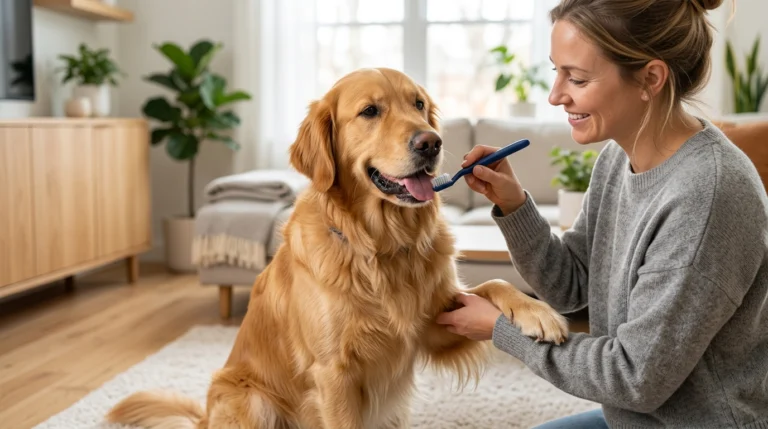
Dental Care for Dogs: How to Safely Brush Their Teeth
Dental care for dogs starts with safe brushing and regular checkups. Learn how to clean your dog’s teeth, prevent plaque, and support healthy gums. Could your dog have mouth pain even while finishing every meal? A few minutes of regular mouth care can help limit plaque before it hardens and contributes to painful disease. Dental care for dogs supports your pet’s health by helping prevent problems that can make eating and resting uncomfortable. Periodontal disease is inflammation and infection of the tissues that support the teeth, including the gums and jawbone. Dogs may keep eating despite oral discomfort, so a normal appetite does not rule out pain. Watch for changes in breath, chewing, or willingness to have the mouth touched. Key Takeaways How Can Dental Care for Dogs Start With Safe Brushing? Aim to brush twice daily, but even a steady routine at least three times a week helps remove plaque. More than 80% of dogs over age three have periodontal disease. Plaque can combine with minerals in saliva and become tartar within a day. Pet toothbrush reaching a dog’s outer teeth gently Choose Safe Supplies and Let Your Dog Get Comfortable Use a soft dog toothbrush or finger brush and toothpaste made for pets. Human toothpaste may contain ingredients dogs should not swallow, including xylitol, which is toxic to dogs. Swallowed baking soda can upset the stomach and disturb the digestive tract’s acid balance. Let your dog taste the pet toothpaste before you bring the toothbrush near the teeth. Keep sessions gentle and brief. If your dog resists strongly or may bite, stop rather than forcing the brush into the mouth. Brush the Teeth That Need Attention Most Begin with the large cheek teeth and canine teeth, then work along the outer tooth surfaces. Brush for about 30 seconds per side. Lift your dog’s lip gently instead of pulling the mouth open. The outside surfaces deserve priority because plaque builds there readily. Even after a professional cleaning, plaque can begin forming again within six hours. A reliable schedule matters more than a single long session. Replace the brush every three months and keep one brush for each dog in a multi-dog home. What Can Help When Brushing Is Difficult? If brushing is not yet workable, start with a product that carries the VOHC seal and matches the kind of support you want. The Veterinary Oral Health Council awards its seal to products shown to reduce plaque or buildup by at least 20%. Accepted products support brushing; they do not replace it. Dog choosing a dental chew…