How to Help a Dog Feel Comfortable Around Visitors
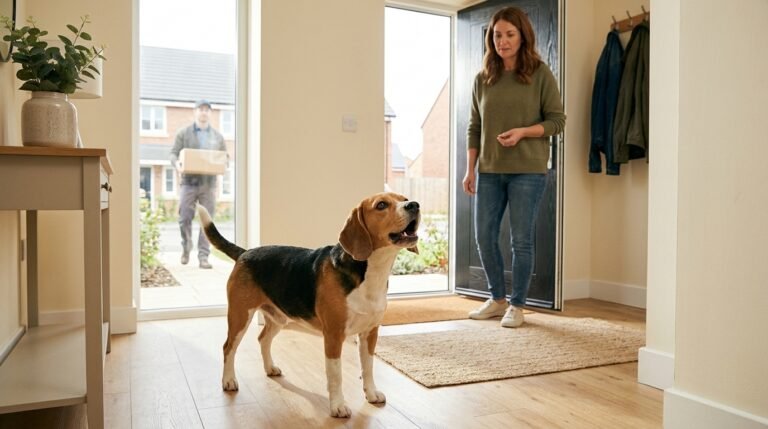
Having visitors over should be an enjoyable experience, but some dogs find unfamiliar people stressful. Your dog might bark at the door, hide behind furniture, jump on guests, or growl when someone approaches.
The good news is that you can help your dog feel safer around visitors with patience, positive reinforcement, and a few simple changes to your routine.
In this guide, you’ll learn how to prepare your home, introduce guests safely, and teach your dog that visitors are nothing to fear.
Why Are Some Dogs Uncomfortable Around Visitors?
Before changing your dog’s behavior, try to understand what might be causing it. Common reasons include:
- Fear of unfamiliar people: Your dog may feel threatened by strangers entering its home.
- Lack of socialization: Dogs that have had limited positive experiences with visitors may struggle with new people.
- Territorial behavior: Some dogs bark because they want to alert their family that someone has arrived.
- Overexcitement: Friendly dogs may jump, bark, or run around because they cannot control their excitement.
- Past negative experiences: An unpleasant encounter with a stranger may make your dog more cautious.
- Noise sensitivity: Doorbells, knocking, and loud conversations can make some dogs anxious.
Pay attention to your dog’s body language. Lip licking, yawning, turning away, a tucked tail, pinned-back ears, or trying to hide can indicate discomfort. Growling and snapping are more serious warning signs that your dog needs space.
1. Prepare Your Dog Before Guests Arrive
A little preparation can make visits less stressful.
Give your dog an opportunity to exercise, sniff, and use the bathroom before guests arrive. Choose activities appropriate for your dog’s age, health, and energy level.
Set up a quiet area with a comfortable bed, fresh water, and familiar toys. This gives your dog somewhere to retreat if the visit becomes overwhelming.
You can also practice with the doorbell or knocking sounds at a low volume. Pair the sound with small treats, gradually increasing the volume only while your dog remains relaxed.
Avoid forcing your dog to greet guests as soon as they walk through the door.
2. Keep Greetings Calm and Predictable
Exciting entrances can make nervous or overexcited dogs react more strongly.
When visitors arrive, consider keeping your dog behind a secure gate or in a comfortable separate room until the initial excitement settles.
Ask guests to enter calmly, avoid shouting, and give your dog time to adjust. If your dog is comfortable, allow it to observe visitors from a distance.
Do not drag your dog toward guests or hold it in place while someone approaches. Your dog should be able to move away.
3. Ask Visitors to Ignore Your Dog at First
One of the easiest ways to reduce pressure is to ask guests not to approach your dog immediately.
They should avoid staring directly at the dog, leaning over it, reaching toward its head, or trying to hug it. These actions can feel threatening to some dogs, even when the person is being friendly.
Instead, guests can sit down, turn slightly sideways, and allow the dog to decide whether to approach.
If your dog chooses to stay at a distance, respect that decision. Feeling safe is more important than making a quick introduction.
4. Use Treats to Create Positive Associations
Reward-based training can help your dog learn that visitors predict pleasant experiences.
Start at a distance where your dog can notice the visitor without becoming overwhelmed. Have a helper calmly toss small, dog-safe treats toward your dog, ideally without requiring the dog to approach.
Repeat this process during short, relaxed sessions. Over time, your dog may begin to associate the presence of visitors with good things.
If your dog refuses treats, barks continuously, freezes, or tries to escape, the situation may be too difficult. Increase the distance or give your dog a break.
Never use treats to lure a frightened dog close enough for a visitor to touch it. That can put the dog in a situation it is not ready to handle.
5. Teach Your Dog to Go to a Safe Place
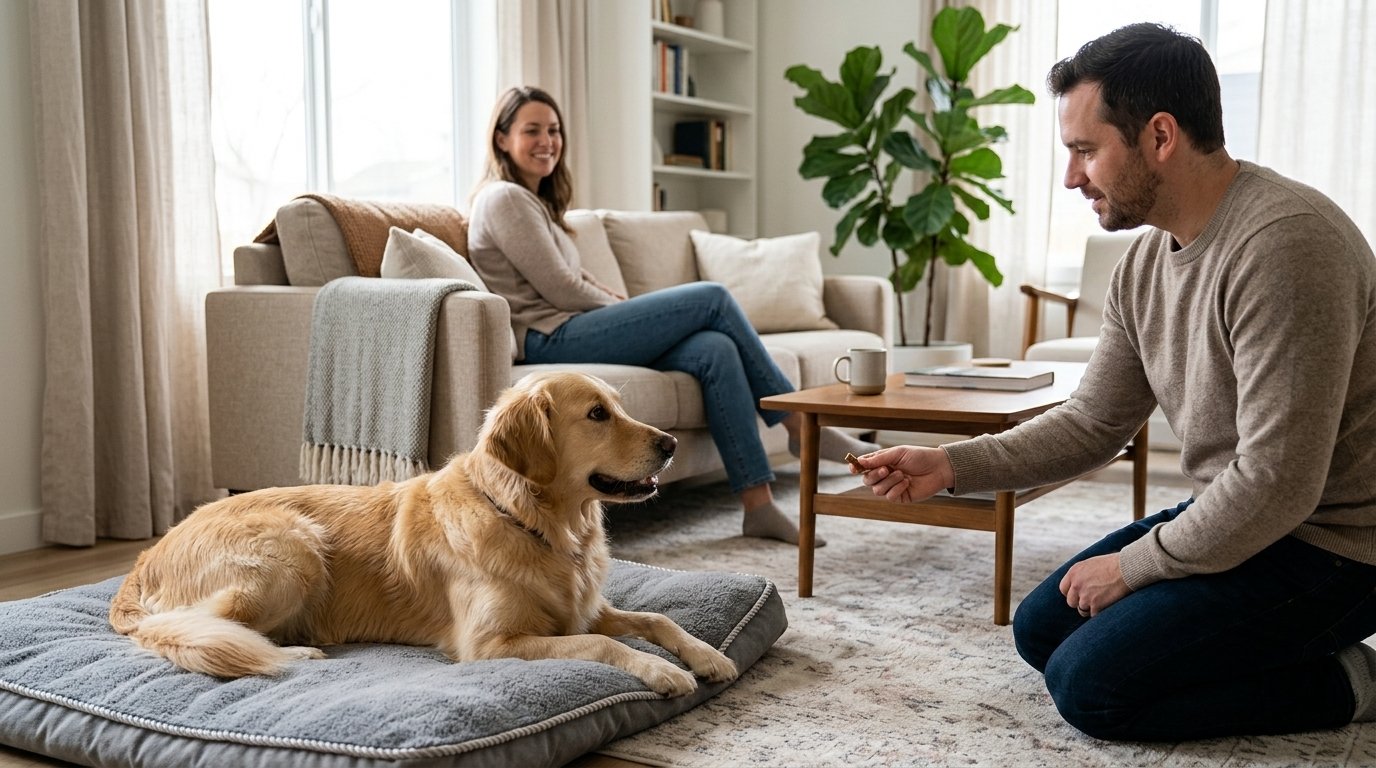
Teaching your dog to settle on a mat or bed can make visits easier.
Begin when no visitors are present:
- Place a mat or dog bed in a quiet area.
- Reward your dog for looking at it, stepping onto it, or lying down.
- Gradually increase the time your dog spends relaxing there.
- Add a cue such as “place” or “bed” once your dog understands the behavior.
- Practice while a family member moves around, then progress to calm visitors at a comfortable distance.
Give your dog treats or a suitable food toy while it relaxes. The safe place should never be used as punishment.
For dogs that are frightened or have a history of biting, use secure barriers and a professional behavior plan rather than relying on a mat alone.
6. Manage Barking, Jumping, and Other Excited Behaviors
Some dogs bark or jump when guests arrive because they are excited, worried, or trying to create distance.
For barking, first identify the cause. Reward brief moments of calm behavior and reduce the intensity of the trigger when necessary.
For jumping, ask guests to remain calm and reward your dog for keeping all four paws on the floor. A baby gate or leash managed by an adult can help prevent jumping while you train.
Avoid yelling, hitting, leash jerks, or punishment for growling. Punishment can increase fear and may suppress warning signals without addressing the underlying discomfort.
If your dog growls, snaps, lunges, or has bitten someone, calmly increase distance and use a secure barrier. Do not attempt close introductions without qualified professional guidance.
7. Keep Visits Short and Give Your Dog Breaks
Long social interactions can become exhausting, particularly for puppies, senior dogs, and anxious pets.
Start with short visits and provide regular breaks in a quiet area. Make sure your dog can drink water, rest, and leave the interaction.
Look for signs that your dog needs a break, such as repeated lip licking, turning away, hiding, pacing, or becoming unusually still.
End the interaction before your dog becomes overwhelmed. Several short, positive experiences are generally more useful than one long, stressful visit.
8. Know When to Get Professional Help
If your dog shows intense fear, persistent distress, growling, snapping, lunging, or biting around visitors, contact your veterinarian and seek help from a qualified, reward-based dog behavior professional.
A veterinarian can check for pain or medical issues that may affect behavior. A professional can also create a gradual training plan tailored to your dog’s triggers and home environment.
If your dog has bitten someone or you believe a bite may occur, keep visitors separated from the dog using secure barriers while you arrange professional help. Do not put children in charge of managing introductions.
Frequently Asked Questions
Should I make my dog greet every visitor?
No. Your dog does not need to greet everyone. Allowing your dog to observe from a safe distance or relax in another room is perfectly acceptable.
Should visitors give my dog treats?
They can, if your dog is comfortable and the treats are given safely. Tossing a treat from a distance is often less intimidating than offering it directly by hand. Follow any dietary restrictions and ask the owner before feeding a dog.
Why does my dog bark at visitors but seem friendly outside?
Dogs can behave differently in different environments. Your home may trigger territorial behavior, uncertainty, or excitement. The way visitors enter the home can also influence your dog’s reaction.
Will my dog eventually become comfortable with strangers?
Many dogs can improve with patient, gradual training and positive experiences. Progress varies, and some dogs may always prefer more distance from unfamiliar people. The goal is to help your dog feel safe, not to make it interact with everyone.
Final Thoughts
Helping your dog feel comfortable around visitors starts with understanding its needs. Prepare your home, keep greetings calm, give your dog choices, and reward relaxed behavior without forcing interaction.
With consistent, positive training, many dogs can learn to cope with visitors more comfortably. Remember that progress takes time, and respecting your dog’s boundaries is an important part of building trust.