How to Train Your Dog: 10 Essential Tips for Good Behavior
Most dog owners run into the same problems. The dog pulls on walks, jumps on guests, ignores you at the park, or learns the wrong lessons faster than the right ones.
The good news is that you don’t need special equipment or years of experience. Learning how to train your dog comes down to a handful of habits: reward what you like, keep sessions short, stay consistent, and build skills in small steps. This guide covers ten practical tips you can start using at home, whether you have a new puppy or an adult dog whose manners need work.
Why Reward-Based Training Is the Best Way to Train Your Dog
Reward-based training means you reinforce behavior you want, usually with treats, toys, praise or play, so your dog is more likely to repeat it.
The American Veterinary Society of Animal Behavior (AVSAB) recommends using only reward-based methods for all dog training, including treating behavior problems. It states that there is no evidence that aversive training is necessary. Aversive methods, which rely on force, pain, or emotional or physical discomfort, shouldn’t be used. This guide therefore doesn’t recommend hitting, yelling, intimidation, or shock, prong or choke collars.
A few things to keep in mind before you start:
- Every dog learns at its own pace. Age, breed, health, past experiences and your environment all affect progress.
- Reward-based doesn’t mean permissive. You still set clear rules and manage your dog’s environment. You simply teach the dog what to do instead of punishing what you don’t want.
- Behavior has many causes. Don’t assume a problem comes from dominance, stubbornness or too little exercise. Fear, pain, boredom, excitement and lack of training can all play a part.
1. Start With Basic Commands (Sit, Stay and Come)
Basic cues give you a shared language with your dog and are the foundation for almost everything else. Practice in a quiet room with few distractions first.
How to teach “sit”
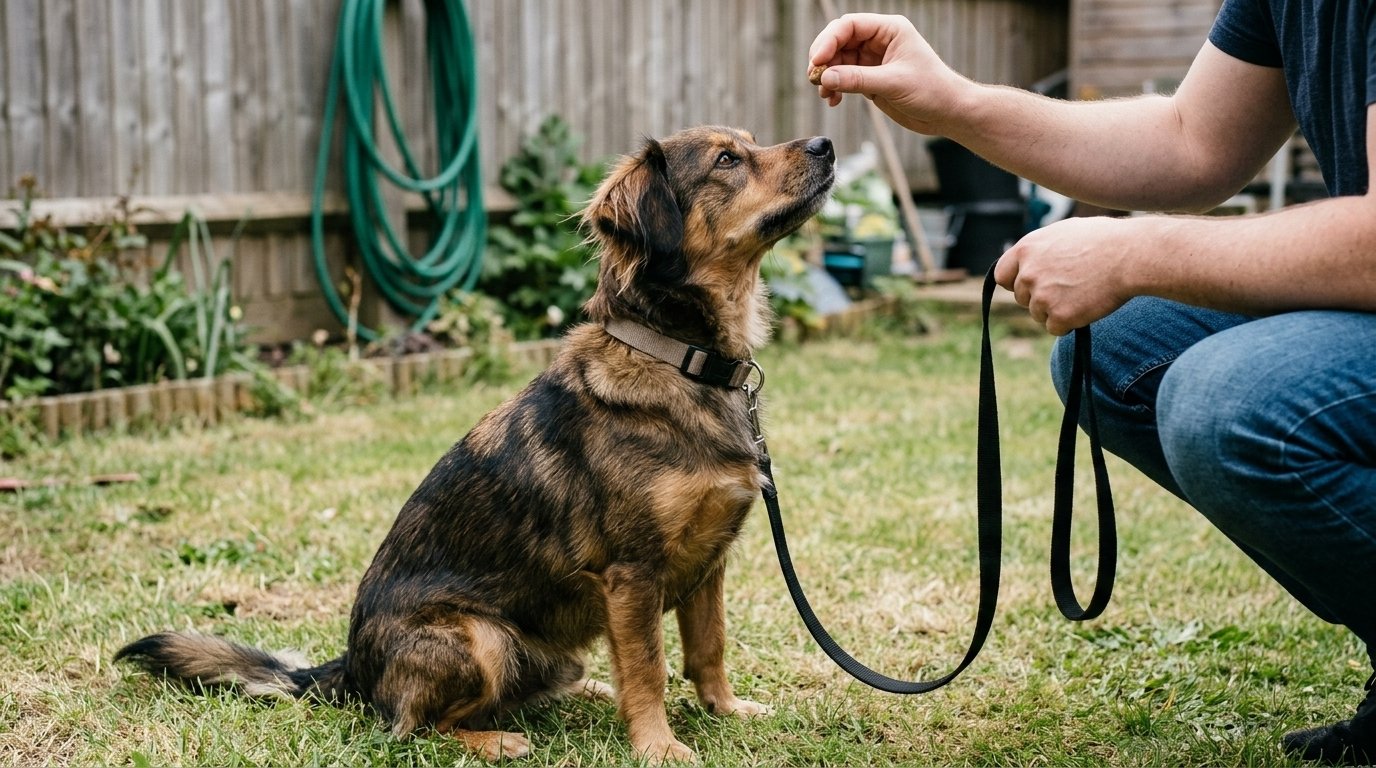
- Hold a small treat close to your dog’s nose.
- Slowly move it up and slightly back over the head. The dog’s bottom usually lowers as the nose follows.
- The instant the bottom touches the floor, say “yes” and give the treat.
- After a few repetitions, add the word “sit” just before you lure.
- Gradually fade the lure so your dog responds to the word or a hand signal.
How to teach “stay”
- Ask for a sit.
- Say “stay,” wait one second, then reward while your dog is still sitting.
- Slowly build time, then distance, one at a time. If your dog gets up, you made the step too hard, so make it easier next time.
- Use a release word such as “okay” so your dog knows when it’s allowed to move.
How to teach “come”
Start indoors with your dog a few steps away. Say your dog’s name and “come” in a happy voice, then reward generously when your dog reaches you. More on this in tip five.
2. Use Positive Reinforcement Effectively
Reward-based training works best when you get the details right.
- Reward quickly. Mark the behavior within a second or two, with a word like “yes” or a clicker, so your dog knows exactly what earned the reward.
- Use rewards your dog actually values. Soft, small treats work well for training. Some dogs work harder for toys or play.
- Reward often at first, then gradually make rewards less predictable as the behavior becomes reliable.
- Count the calories. Treats are part of your dog’s daily food. Many veterinary sources suggest keeping treats and extras to about 10% of daily calories, so use small pieces or part of the regular kibble.
- Ignore or redirect, don’t punish. If your dog does something you don’t like, calmly interrupt, redirect to an alternative behavior, and reward that.
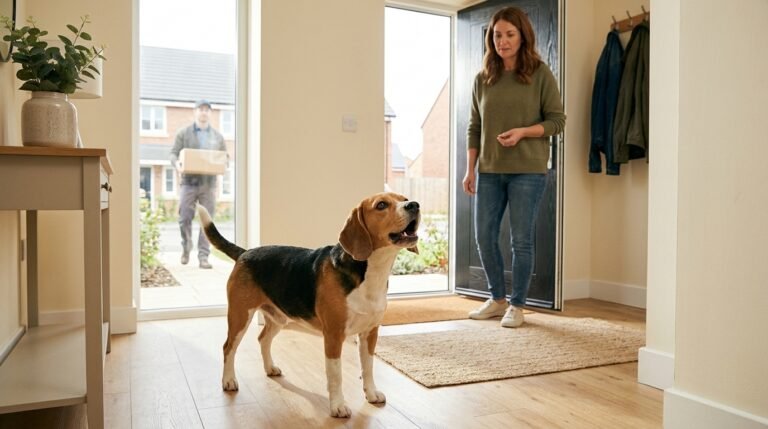
Example: Your dog barks at the door when the doorbell rings. Instead of yelling, teach your dog to go to a mat and reward them there. Practice with a recorded doorbell first, then with real visitors.
3. Keep Training Sessions Short and Engaging
Dogs, especially puppies, learn best in short, frequent sessions. A few minutes at a time, a few times a day, usually works better than one long session.
- Stop while your dog is still enjoying it. End on a success.
- Train before meals if your dog is food-motivated, but never withhold meals for training.
- Pick one goal per session. Don’t try to teach sit, down and recall in the same few minutes.
- Watch your dog’s body language. Lip licking, yawning, turning away or sniffing the ground can mean your dog is tired, stressed or confused. Take a break, or make the exercise easier.
- Mix it up. Short games and practice during daily routines, like asking for a sit before meals or doors, build habits without extra effort.
4. Stay Consistent Across the Household
Dogs learn from what works. If one person lets the dog jump up and another doesn’t, the dog learns that jumping sometimes pays off.
Sit down with everyone in the household and agree on:
- Cue words. Decide whether it’s “down” or “lie down,” and “off” or “get down,” and use the same ones.
- House rules. Is the dog allowed on the couch? On the bed? Does it eat at the table?
- Rewards. Everyone should reward the same behaviors and ignore the same ones.
- Routines. Regular times for meals, walks and training help dogs feel secure.
Write the rules down and put them somewhere visible, especially if children are involved. Supervise young children around dogs at all times.
5. Teach a Reliable Recall Safely
A dependable recall (coming when called) can keep your dog safe. It’s also one of the hardest skills to teach, so go slowly.
Steps
- Start indoors. With your dog a few steps away, say its name and “come,” then reward when it reaches you.
- Make it fun. Use high-value treats, praise and play. The American Kennel Club notes that coming to you should be one of the best things in your dog’s day.
- Add distance and distractions gradually. Move to the yard, then to quiet outdoor spaces.
- Use a long line outdoors. A long training leash (the AKC mentions 20- and 30-foot lines) gives your dog freedom while keeping it safe as you practice.
- Practice often, and reward every time, especially in the early stages.
Safety rules
- Never punish your dog for coming, even if it did something you dislike first. Your dog should always be glad it came.
- Don’t use the recall cue for unpleasant things like baths, nail trims or ending a fun walk. Walk over and calmly collect your dog instead, or call it for fun reasons as well.
- No recall is 100% perfect. Don’t let your dog off leash in unfenced or unsafe areas, near roads or in places where leash laws apply, even if your dog recalls well at home.
6. Improve Loose-Leash Walking
Pulling is one of the most common complaints. Dogs pull because it works: they get where they want to go faster.
(In the UK and Australia, the leash is usually called a “lead.” The principles are the same.)
Steps
- Practice indoors first with your dog at your side and treats at your leg.
- Reward your dog for staying near you while the leash is loose.
- When the leash tightens, stop. Wait for your dog to ease the tension, or turn and walk the other way, then reward when it returns to your side.
- Let your dog sniff as a reward. A “go sniff” release gives walks purpose and rewards calm walking.
- Start with short, easy routes with few distractions, and build up.
Equipment: Use a well-fitted flat collar or a harness, and a standard-length leash. Some trainers find certain front-clip harnesses helpful, but equipment won’t replace training. Avoid choke, prong and shock collars, which rely on discomfort.
Progress takes time, particularly outdoors where there is a lot to smell and see. If walks are stressful, shorter, quieter routes can help, and a qualified trainer can show you hands-on techniques.
7. Reduce Jumping on People
Jumping is a natural greeting behavior, and it’s usually rewarded by attention, even negative attention.
- Manage the situation. Use a leash, baby gate or exercise pen to prevent your dog from practicing jumping while you train.
- Teach an alternative. Ask for a “sit” for greetings, or reward keeping “four on the floor” by scattering treats on the ground.
- Remove the reward. If your dog jumps, calmly turn away and withdraw attention. Greet your dog again when all four paws are on the floor.
- Get guests on board. Ask visitors to ignore jumping and only greet your dog when it’s calm. Practice with friends before real visits.
- Don’t push, knee or shout. These can confuse or frighten your dog, and the attention may even reinforce the jumping.
Example: A guest arrives. Your dog is on a leash. You ask for a sit, and the guest approaches. If your dog stays seated, the guest says hello. If your dog leaps up, the guest stands up straight, turns away, and tries again.
8. Provide Physical Exercise and Mental Enrichment
A dog with plenty of appropriate outlets is usually easier to train. But exercise isn’t a cure-all. Some dogs have behavior problems for other reasons, such as fear, pain or lack of training.
- Physical exercise: Walks, play, fetch, and swimming where safe. How much depends on breed, age and health. Puppies, seniors and dogs with medical conditions may need different amounts, so ask your vet.
- Mental enrichment: Food puzzles, snuffle mats, scatter feeding, scent games and short training sessions all keep a dog’s brain busy.
- Sniffing walks: Letting your dog explore at its own pace is mentally tiring and satisfying.
- Rest: Dogs need plenty of sleep and quiet time, especially puppies.
Be careful in hot weather, and avoid overexertion, especially with puppies and brachycephalic (flat-faced) breeds.
9. Socialize Dogs Gradually and Positively
Socialization means helping a dog feel comfortable with the people, animals, sounds and places it will meet in life. The AVSAB says the most important window for puppy socialization is the first three months of life, and that puppies should meet new people, animals and environments as much as can be done safely, without causing fear or overstimulation.
Because puppies are not yet fully vaccinated at this age, talk to your vet about a safe plan, such as supervised puppy classes and low-risk outings.
For puppies and adult dogs alike:
- Go at your dog’s pace. Keep distance from whatever worries your dog and reward calm behavior.
- Pair new experiences with treats, so they become associated with good things.
- Never force a frightened dog to greet people or dogs. Forcing can make fear worse.
- Quality over quantity. A few calm, positive experiences are better than a crowded, overwhelming one.
- Watch body language. Stiffness, a tucked tail, hiding or trying to move away mean your dog needs more space.
Adult dogs can still learn to feel more comfortable with new things. It often takes more time and patience, and a professional can help if your dog is fearful or reactive.
10. Recognize When to Seek Professional Help
Some problems need more than a training guide. Contact a professional if your dog:
- Shows aggression, such as growling, snapping or biting
- Has severe fear or anxiety, such as panic, destructive behavior or constant distress when left alone
- Shows sudden behavior changes with no obvious cause
- Seems to be in pain, or is limping, stiff, or reacts when touched
- Is not improving despite consistent, reward-based practice
Start with your veterinarian if the change is sudden, or you suspect pain or illness, because medical problems can affect behavior. Your vet can also refer you to a veterinary behaviorist when needed.
Choosing a trainer: Dog training is not regulated in many places, so ask about methods. Look for someone who uses reward-based techniques, is happy to explain their approach, and doesn’t use shock, prong or choke collars or intimidation. Avoid anyone who guarantees quick fixes.
Common Dog Training Mistakes (and How to Avoid Them)
- Inconsistent rules. Agree on cues and rules with everyone in the house.
- Late rewards. Reward the moment the behavior happens.
- Training sessions that are too long, or that go on after your dog is tired.
- Moving too fast. If your dog fails, go back a step.
- Punishing instead of teaching. It can create fear and damage trust.
- Repeating cues over and over. Say a cue once, then help your dog succeed.
- Expecting too much too soon. Skills that work at home need practice in new places.
- Skipping the vet when behavior changes suddenly.
Frequently Asked Questions
What is the best way to train a dog at home?
Use short, regular sessions with small rewards, start with simple cues like sit and come in a quiet place, and add distractions gradually. Everyone in the household should use the same cues and rules.
How long does it take to train a dog?
It depends on the dog, the skill, and how often you practice. Simple cues can be learned quickly, while recall and loose-leash walking take longer. Be wary of any promise of fast results.
When should I start training my puppy?
Right away. Puppies can begin learning simple cues and house rules as soon as they come home, and early, positive socialization is important. Keep sessions very short and fun.
Is it too late to train an older dog?
No. Adult and senior dogs can learn new skills and habits with reward-based training. Progress may take longer if the dog has long-established habits, and a veterinary check is wise if there are health concerns.
Do I need a professional trainer?
Many owners succeed with the basics at home, but a trainer or classes can help, especially for first-time owners. For aggression, severe fear or anxiety, see your vet first and ask about a qualified behavior professional.
Conclusion
Learning how to train your dog is less about tricks and more about patience, consistency and kindness. Start with simple cues, reward what you like, keep sessions short, and build slowly toward recall, leash manners and calm greetings. Meet your dog’s exercise and enrichment needs, socialize gradually, and don’t hesitate to call your vet or a qualified trainer if something isn’t improving.
Practical next steps:
- Choose one skill to work on this week.
- Agree on cues and rules with your household.
- Set aside a few short sessions a day.
- Book a vet check if you’ve noticed sudden changes.
- Look for a local reward-based class if you’d like hands-on help.
Veterinary and Training References
- American Veterinary Society of Animal Behavior (AVSAB), Position Statements, including Humane Dog Training and Puppy Socialization: https://avsab.org/resources/position-statements/
- American Kennel Club, “Teach Your Dog to Come When Called”: https://www.akc.org/expert-advice/training/teach-your-dog-to-come-when-called/
- American Kennel Club, “Teach Your Puppy to Walk on a Leash”: https://www.akc.org/expert-advice/training/teach-puppy-walk-leash/
- American Kennel Club, “How to Stop Your Dog From Jumping Up on People”: https://www.akc.org/expert-advice/training/how-to-stop-your-dog-from-jumping-up-on-people/
This article is for general information. It does not diagnose behavior problems or replace advice from a veterinarian or qualified behavior professional.