
Why Does My Dog Bark So Much? 8 Common Reasons and How to Help
Does your dog bark at every sound outside, every visitor at the door, or seemingly nothing at all? Excessive barking can be frustrating, especially when it disturbs your household or neighbors. But barking is one of the ways dogs communicate, and understanding what your dog is trying to express is the first step toward changing the behavior.
Dogs bark for many reasons, including excitement, fear, boredom, frustration, attention-seeking, and distress when left alone. The best way to reduce excessive barking is to identify its cause, manage the triggers, and teach your dog what to do instead.
In this guide, we’ll explore eight common reasons dogs bark, practical ways to help, and signs that professional advice may be needed.
1. Your Dog Is Alerting You to Sounds or Visitors
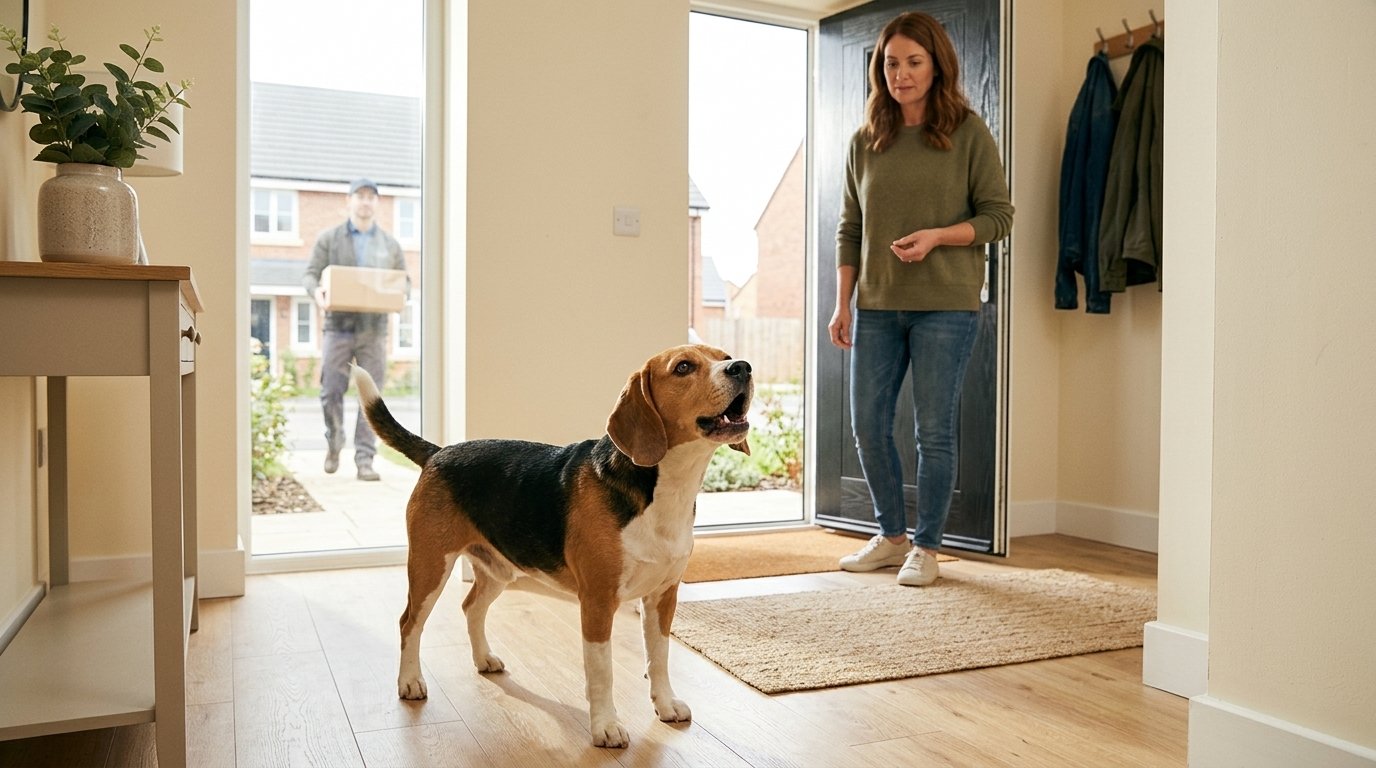
Some dogs bark when they hear footsteps, a doorbell, a delivery person, or people passing the house. This is often called alert barking. Your dog may be responding to something unfamiliar or trying to warn you that someone is nearby.
What you might notice:
- Barking at the front door or windows.
- Reacting to cars, footsteps, or voices outside.
- Running toward a fence or entrance when someone approaches.
- Settling down after the person or sound disappears.
How to help
Reduce the trigger when possible. If your dog barks at people through a window, close the curtains or use a window covering. If outdoor sounds trigger barking, move your dog’s resting area away from the noisiest window.
Teach your dog to go to a mat or bed when the doorbell rings. Begin practicing when no visitors are present: reward your dog for going to the mat and staying relaxed. Gradually introduce a quiet doorbell sound, rewarding calm behavior.
You can also reward your dog when they notice a sound but remain quiet. Start at a level where your dog can still respond to you.
Avoid shouting over your dog’s barking. Your dog may interpret your raised voice as more excitement or alarm.
2. Your Dog Is Excited
Some dogs bark when greeting family members, preparing for a walk, seeing another dog, or anticipating playtime. Excitement barking can come with jumping, spinning, tail wagging, or difficulty settling down.
This doesn’t necessarily mean your dog is misbehaving deliberately. Your dog may simply be struggling to control their excitement.
How to help
Practice rewarding calm behavior during everyday routines.
Before attaching the leash, wait for a brief moment when your dog has four paws on the floor. Reward that moment, then continue getting ready. If excitement rises again, pause and make the next step easier.
When greeting your dog, keep your voice and movements calm. Offer attention when your dog can settle rather than making the greeting more stimulating.
For playtime, reward short pauses and moments of quiet. Your goal isn’t to eliminate your dog’s happiness; it’s to help them manage excitement without barking continuously.
3. Your Dog Wants Attention
Dogs can learn that barking makes people look at them, talk to them, touch them, or give them something they want. Even telling your dog to be quiet can sometimes provide the attention that keeps the behavior going.
Attention-related barking may happen when you’re working, eating, talking on the phone, or relaxing on the sofa.
How to help
First, make sure your dog has appropriate opportunities for exercise, interaction, rest, and toileting. Don’t assume all barking is attention-seeking.
When you identify a pattern of barking for attention, avoid accidentally rewarding the barking with an immediate game or treat. Instead, reward an alternative behavior, such as lying on a mat or sitting quietly beside you.
For example:
- Teach your dog to settle on a comfortable mat.
- Reward short periods of quiet resting.
- Gradually increase the time between rewards.
- Offer attention and activities before your dog becomes restless.
If barking is driven by fear, distress, or another unmet need, simply ignoring it will not solve the underlying problem.
4. Your Dog Is Frightened or Anxious
Barking can be a response to fear. Your dog may bark at unfamiliar people, other dogs, traffic, loud noises, or objects they don’t understand.
Look at the whole body, not just the sound. A frightened dog may have a tense posture, flattened ears, a lowered body, a tucked tail, or repeated attempts to move away. Some dogs bark while moving forward; others bark while retreating.
How to help
Give your dog enough distance from whatever is frightening them. Don’t force them to approach a stranger or another dog to prove that they are safe.
Work at a distance where your dog can notice the trigger without becoming overwhelmed. When the trigger appears, offer a tasty treat if your dog is comfortable eating. Over time, this can help create a more positive association.
If your dog becomes tense or starts barking intensely, increase the distance and try again in an easier situation.
Persistent fear or severe reactivity may require help from a veterinarian and a qualified, reward-based behavior professional. Avoid punishment, which can make fearful reactions worse.
5. Your Dog Is Bored or Frustrated
Dogs need opportunities to move, explore, sniff, play, rest, and interact with their environment. When their physical and mental needs aren’t being met, some dogs develop repetitive barking or other unwanted behaviors.
Barking may be more common when a dog spends long periods with little to do, watches activity they cannot reach, or is prevented from exploring something interesting.
How to help
Choose activities suited to your dog’s age, health, temperament, and breed.
Try:
- Daily walks appropriate for your dog’s needs.
- Sniffing games around the home or garden.
- Food puzzles and supervised enrichment toys.
- Short sessions teaching new cues or tricks.
- Safe opportunities for play and social interaction.
Rotate toys to keep them interesting. You can also scatter part of your dog’s regular food in a safe area for a supervised sniffing activity.
More exercise isn’t always the answer. An overtired or overstimulated dog may also struggle to settle, so balance activity with enough rest.
6. Your Dog Barks When Left Alone
If your dog barks, howls, whines, scratches doors, or becomes destructive when you leave, they may be experiencing distress related to being alone.
Some dogs bark briefly after an owner leaves and then settle. Others remain distressed for much longer. Barking alone does not prove that a dog has separation anxiety, but persistent vocalization combined with other signs deserves attention.
How to help
If possible, use a camera to observe what happens after you leave. Look for the timing of the barking and whether your dog can settle, eat, or rest.
Practice very short absences that your dog can handle comfortably, gradually increasing the duration only when they remain relaxed. For some dogs, even a brief separation may be difficult, so start with an easier step.
Avoid leaving a severely distressed dog to bark for hours in the hope that they will get used to it. This can worsen the experience.
If your dog panics when alone, injures themselves trying to escape, or cannot tolerate even brief absences, contact your veterinarian. A tailored behavior plan may be needed.
7. Your Dog Reacts to Other Dogs or People
Some dogs bark when they see another dog across the street, someone approaching on a walk, or a person entering their space. This is sometimes described as reactivity.
The cause can vary. A dog may be frightened, frustrated because they cannot approach, overly excited, or trying to create distance. Barking alone cannot tell you exactly which emotion is involved.
How to help
Start by increasing distance from the trigger. Choose quieter walking routes or times of day while you work on the behavior.
When your dog notices another dog but remains able to focus on you, calmly reward them. Over time, you can practice at gradually closer distances if your dog stays comfortable.
Do not force greetings, tighten the leash and drag your dog toward another dog, or punish barking. If your dog is lunging, snapping, or difficult to control, seek help from a qualified reward-based trainer or veterinary behavior professional.
Safety comes first. Use secure equipment and avoid close encounters that are likely to overwhelm your dog.
8. Your Dog May Be in Pain or Experiencing a Health Change
A dog that suddenly starts barking more than usual may be reacting to discomfort, changes in hearing or vision, confusion, or another health issue.
Older dogs may also develop changes in sleep, awareness, or behavior that lead to more vocalization, particularly at night.
How to help
Notice whether the barking began suddenly or occurs alongside other changes, such as:
- Restlessness or difficulty getting comfortable.
- Sensitivity when touched.
- Changes in appetite or sleep.
- Confusion in familiar surroundings.
- Unusual vocalization during the night.
- Changes in hearing, vision, or mobility.
Arrange a veterinary appointment if barking changes unexpectedly or you suspect pain or illness. Seek prompt veterinary care if your dog appears to be in significant pain or has other urgent symptoms.
Don’t assume a sudden change is simply a training problem. Identifying a medical cause may be an important first step.
How to Figure Out Why Your Dog Is Barking
Before choosing a training technique, observe the pattern. A simple behavior diary can help you identify triggers and track progress.
For several days, write down:
- When: What time does the barking happen?
- Where: Is your dog near a window, in the garden, or home alone?
- Trigger: What happened just before the barking began?
- Body language: Did your dog look excited, tense, frightened, or restless?
- Duration: Did the barking stop quickly or continue for a long time?
- What helped: Did distance, a quiet room, a toy, or a change in routine make a difference?
For example, if your dog barks whenever someone walks past the front window, you can try blocking the view and rewarding calm behavior away from the window.
If barking happens mainly when you’re absent, a camera may help you understand whether your dog settles or remains distressed.
The goal is to identify a pattern rather than guess at the cause.
A Simple Plan to Help Your Dog Bark Less
Once you have a better idea of what’s causing the barking, follow these steps.
Step 1: Manage the environment
Reduce unnecessary exposure to triggers while you work on training. This could mean closing curtains, moving your dog’s bed, choosing quieter walking routes, or creating a comfortable resting area.
Step 2: Reward the behavior you want
Notice and reward moments when your dog is relaxed, quiet, or calmly observing a trigger. Use treats, play, or another reward your dog enjoys.
Step 3: Teach an alternative behavior
Depending on the situation, teach your dog to go to a mat, look toward you, settle quietly, or move away from a window. Practice when the environment is calm before adding distractions.
Step 4: Make training easier when needed
If your dog is barking intensely, the situation may be too difficult. Increase the distance from the trigger, reduce the noise, or shorten the session.
Step 5: Track small improvements
Your dog may not stop barking completely, and that isn’t always necessary. Look for meaningful progress, such as recovering more quickly, barking less frequently, or responding to a familiar cue.
Reward-based methods are recommended by the American Veterinary Society of Animal Behavior because they support learning while avoiding the welfare risks associated with aversive training methods. See the AVSAB guidance on humane dog training.
What Not to Do When Your Dog Barks
Avoid these common mistakes:
- Yelling at your dog: This can increase excitement or distress.
- Using fear or physical punishment: These methods can damage trust and worsen some behavior problems.
- Forcing your dog to face a trigger: An overwhelmed dog may become more frightened rather than learn to feel safe.
- Assuming every bark has the same cause: Alert barking, excitement, fear, and separation-related distress require different responses.
- Expecting instant results: Behavior change takes time and consistent practice.
- Ignoring possible health problems: Sudden or unusual barking can warrant a veterinary assessment.
If you feel frustrated, create a safe, comfortable environment for your dog and take a break from training.
Frequently Asked Questions
Why does my dog bark at everything?
Your dog may be responding to sounds, movement, unfamiliar people, excitement, fear, or frustration. Observe what happens just before the barking and look for patterns. Reducing exposure to triggers and rewarding calm behavior may help.
Should I ignore my dog when it barks?
Not always. If barking is maintained by attention, avoiding attention during the barking and rewarding quiet behavior may help. But barking caused by fear, pain, or distress when alone needs a different response. Identify the likely cause before deciding what to do.
Do dogs bark because they are bored?
Some dogs bark when they lack sufficient activity, enrichment, or social interaction. However, boredom is only one possible cause. Consider your dog’s daily routine and body language before deciding how to help.
Why does my dog bark when I leave the house?
Your dog may be reacting to being alone, but the cause can vary. Observe whether they settle shortly after you leave or remain distressed. Persistent barking alongside pacing, destructive behavior, escape attempts, or other signs of distress warrants veterinary advice.
Can I train my dog to stop barking completely?
The goal is usually to reduce unnecessary or distress-related barking, not eliminate normal communication. With appropriate management and reward-based training, many dogs can learn to respond more calmly to common triggers. Results depend on the cause, the dog, and the consistency of the plan.
Final Thoughts
If your dog barks a lot, start by asking what happens just before the barking begins. Is your dog excited, frightened, bored, reacting to a sound, or struggling when left alone?
Once you understand the likely trigger, you can make the environment easier, reward calm behavior, and teach an alternative response. Be patient and avoid punishment. If the barking is sudden, severe, or associated with distress or possible pain, consult your veterinarian.
With the right approach, you can help your dog feel more comfortable while making life at home more peaceful for everyone.